Faces, age, and visual assessment
People recognise faces, estimate age, and judge similarity. The research examines which visible features support these judgements and how observers, image conditions, and task demands affect them.
Which features can be assessed? How do observers differ? What roles do perspective, image quality, and task play?
Research focus
What is seen?
Faces contain contours, proportions, skin structures, ageing cues, soft-tissue forms, and image-dependent information. The research examines which of these cues observers use in age judgements, similarity judgements, or image-based comparison tasks.
How do judgements differ?
Assessments can differ between observers even when the same images are shown. Feature use, observer differences, and — depending on the task — decision criteria can therefore be examined separately.
Under which conditions is a judgement traceable?
Agreement between observers and repeatability within the same observer are distinct properties. For tasks with objectively defined accuracy, confidence calibration can be examined separately.
Levels of analysis in visual judgement
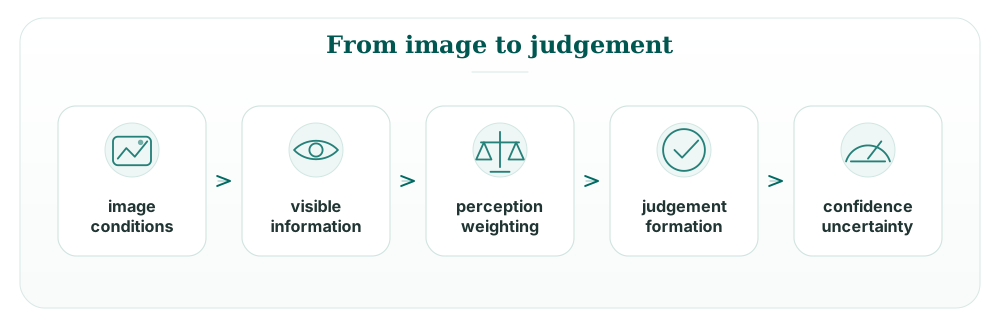
Image-based judgements depend on the available stimulus, the task, and the observer. These components are recorded separately insofar as the respective design permits.
Plausibility alone is not a quality criterion. Depending on the research question, relevant measures include repeatability, agreement between observers and — for objectively scorable tasks — accuracy and confidence calibration.
Material and methods
The material includes a stimulus pool of three-dimensionally recorded faces and corresponding image data from 208 individuals aged 9 to 85 years. Standardised views can be derived from this material and linked to observer judgements, confidence measures, and analyses of variability.
Examples of research fields
Visual age assessment
How age is estimated from visible features of the face and head, and why such judgements vary between observers.
Image-based assessment of similarity and difference
How similarity and difference between people are judged from images, and how viewpoint, image quality, and the comparison task affect this process.
Image quality and visibility
Which information is available under specific image conditions, and when judgements remain limited.
Confidence and calibration
How subjective confidence relates to actual accuracy when the task permits an objective assessment of correctness.