
Study and empirical prior work
The material basis was used to examine visible ageing cues and observer judgements.
The study used 3D face and head data, standardised stimuli, repeated ratings, and relations between image information, age judgement, and chronological age.
It examined how visible facial structure is translated into observable age judgements.
The page is limited to the logic of the study. Person-identifying image data, raw values, and complete result tables are not publicly shown.
Visible cue areas
The 32 rating variables covered several areas in which age can become visible in the face. The overview shows these areas without evaluating or ranking individual features.
The features were described, grouped, and made usable for observer ratings, summary measures, and statistical analysis.

Cues as visible information
The prior work treated ageing cues as visible information that has to be recognisable, comparable, and rateable by observers. Lines and grooves, gain and loss describe different directions of visible change.
Lines and grooves
Lines, wrinkles and grooves describe visible surface and relief structures. They become informative only when their course, expression and comparability are visible in the image.
Gain and loss
Gain refers to visible findings that may appear or become more pronounced with age. Loss means that existing structures become weaker, thinner, or lose contour.
Observer judgement
What matters is whether a cue is repeatedly seen by observers, rated in a similar way, and used in an age judgement.
Age relation of judgements and cue groups
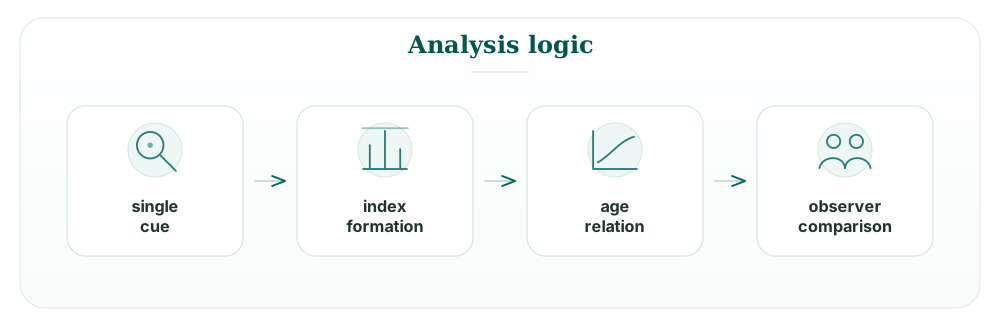
Visible age does not depend on a single cue; it emerges from several cue groups. Single cues were first rated separately. For analysis, related cues were combined into summary measures. These included wrinkles, grooves, and lines, age signs that may appear or become more pronounced, and features where existing structures become weaker, thinner, or lose contour. This made it possible to examine how cue groups relate to age judgements, chronological age, observer differences, and retest effects.
Analysis logic
Repeatability, variability and calibration
The earlier study shows that age judgements do not arise from a single cue. They arise from image information, observed cue expression, weighting and confidence.
Further analyses examine repeatability, differences between observers, signal components of cue groups, and the calibration of visual age judgements against chronological age.